
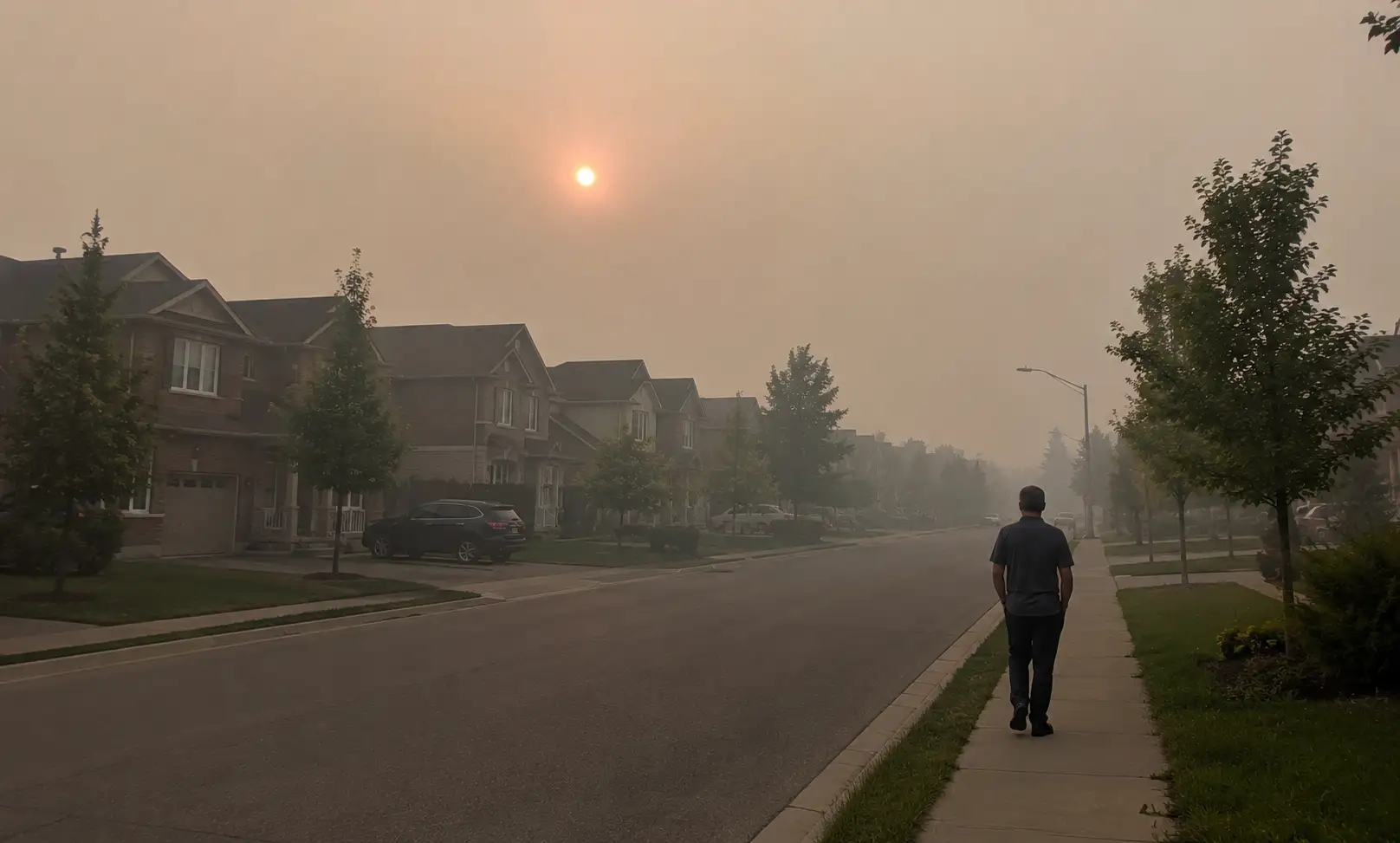
Wildfire smoke can travel far from the actual fire zone, and many Ontario homeowners may notice hazy skies, smoke odours, irritated eyes, coughing, or heavier indoor air even when the fire is hundreds of kilometres away. When outdoor air quality drops, your home’s HVAC system and air purification setup become an important part of protecting your indoor comfort.
If you live in Orangeville, Alliston, or nearby communities, here are practical indoor air quality solutions that can help reduce smoke particles, improve comfort, and support cleaner air inside your home.
Quick Answer: What Helps Improve Indoor Air Quality During Wildfire Smoke?
The best indoor air quality solutions during wildfire smoke include keeping windows and doors closed, running your HVAC fan when appropriate, using the highest-quality filter your system can safely handle, adding a whole-home air purifier such as an iWave air purifier, and using a certified portable HEPA air cleaner in the rooms where your family spends the most time.
For whole-home advice and installation support, Don’s Heating & Cooling is your trusted HVAC contractor in Orangeville and Alliston.
Why Wildfire Smoke Affects Indoor Air
Wildfire smoke contains fine particles, often referred to as PM2.5. These particles are small enough to enter homes through open windows, doors, ventilation gaps, and air leaks. Even if your home looks clean, smoke particles can still affect indoor comfort and may be more noticeable for children, older adults, people with asthma, and anyone with heart or lung conditions.
Health Canada recommends keeping indoor air as clean as possible during wildfire smoke events by closing windows and doors, using the best air filter your ventilation system can handle, and using a certified portable air cleaner that can filter fine particles.
You can also monitor local conditions through the Environment Canada Air Quality Health Index and review Health Canada’s guidance on protecting indoor air from wildfire smoke.
1. Keep Windows and Doors Closed During Smoke Alerts
When the air outside is smoky, the first step is simple: reduce how much outdoor air enters your home.
Keep windows and exterior doors closed as much as possible. Avoid opening windows at night unless outdoor air quality has clearly improved. If your home feels hot, use your air conditioning system instead of bringing smoky outdoor air inside.
During very hot weather, staying cool is also important. If you are unsure how to balance cooling and air quality, an HVAC technician can help you understand the safest setup for your home.
2. Upgrade Your HVAC Filter — But Make Sure Your System Can Handle It
Your furnace or air handler filter can help reduce airborne particles, but not every HVAC system is designed for every filter type. A higher-rated filter may capture more particles, but it can also restrict airflow if your system is not built for it.
Health Canada recommends using the highest-quality air filter your ventilation system can handle. For many systems, that may mean a MERV 13 or higher filter, but the right choice depends on your equipment, ductwork, airflow, and manufacturer recommendations.
Before installing a very high-efficiency filter, ask a professional to confirm compatibility. The wrong filter can reduce airflow, make your system work harder, and affect comfort.
If your system needs a filter check, maintenance, or indoor air quality upgrade, Don’s Heating & Cooling can help with indoor air quality products in Orangeville and Alliston.
3. Add an iWave Air Purifier for Whole-Home Air Cleaning
An iWave air purifier is a whole-home air purification option installed inside your HVAC system. As air moves through the system, the iWave helps reduce certain airborne particles, smoke odours, and other contaminants in the air stream.
For wildfire smoke concerns, an iWave air purifier can be part of a stronger indoor air quality strategy, especially when paired with proper filtration and regular HVAC maintenance. It is not a replacement for closing windows during poor air quality days, but it can support cleaner, fresher indoor air throughout the home.
This type of solution is especially useful for homeowners who want air purification beyond one room and prefer a system that works through their existing ducted HVAC setup.
4. Use a Portable HEPA Air Cleaner in Key Rooms
For bedrooms, living rooms, or home offices, a portable HEPA air cleaner can be helpful during smoky days. Health Canada recommends choosing a certified portable air cleaner sized for the room and checking the CADR rating, especially the tobacco smoke CADR, because wildfire smoke contains fine particles.
For best results:
- Use the air cleaner in the room where you spend the most time.
- Keep doors and windows closed while it runs.
- Replace or clean filters according to the manufacturer’s instructions.
- Choose a unit sized properly for the room.
You can learn more from Health Canada’s guide to choosing a portable air cleaner for indoor air.
5. Run Your HVAC System the Right Way
Your HVAC system can help circulate and filter indoor air, but settings matter. In some homes, running the fan can help move air through the filter more consistently. In others, the best approach depends on the system type, filter, and airflow design.
A professional HVAC technician can check whether your current filter, fan setting, ductwork, and air purifier options are working together properly. This is especially important during wildfire smoke season, when your system may run more often because of both heat and poor air quality.
6. Avoid Adding More Indoor Pollution
When outdoor smoke is already a problem, try not to add extra pollutants indoors. During smoke alerts, avoid burning candles, using incense, smoking indoors, or doing activities that create extra particles in the air. If possible, limit heavy cleaning activities that stir up dust until air quality improves.
The goal is to create a cleaner indoor environment and reduce the total particle load your HVAC system and air cleaners have to manage.
When Should You Call an HVAC Professional?
You should contact an HVAC professional if:
- Your home smells smoky even with windows closed.
- Your filter gets dirty very quickly during smoke events.
- You are unsure which MERV filter your system can handle.
- Your AC airflow feels weak after changing the filter.
- You want to add a whole-home air purifier such as an iWave air purifier.
- Someone in your home has asthma, allergies, or respiratory sensitivity.
- You want a professional indoor air quality assessment.
Don’s Heating & Cooling can review your current HVAC setup and recommend indoor air quality solutions that fit your home, comfort needs, and budget.
Get Help With Indoor Air Quality Solutions in Orangeville & Alliston
Wildfire smoke is becoming a bigger concern for Ontario homeowners. While you cannot control the air outside, you can take steps to improve the air inside your home.
From filter upgrades and HVAC maintenance to whole-home air purification options like the iWave air purifier, Don’s Heating & Cooling can help you choose the right solution for your home.
If you have questions, need advice, or want a free quote, contact Don’s Heating & Cooling today. Our team will be happy to guide you and help you improve your home’s indoor air quality.