
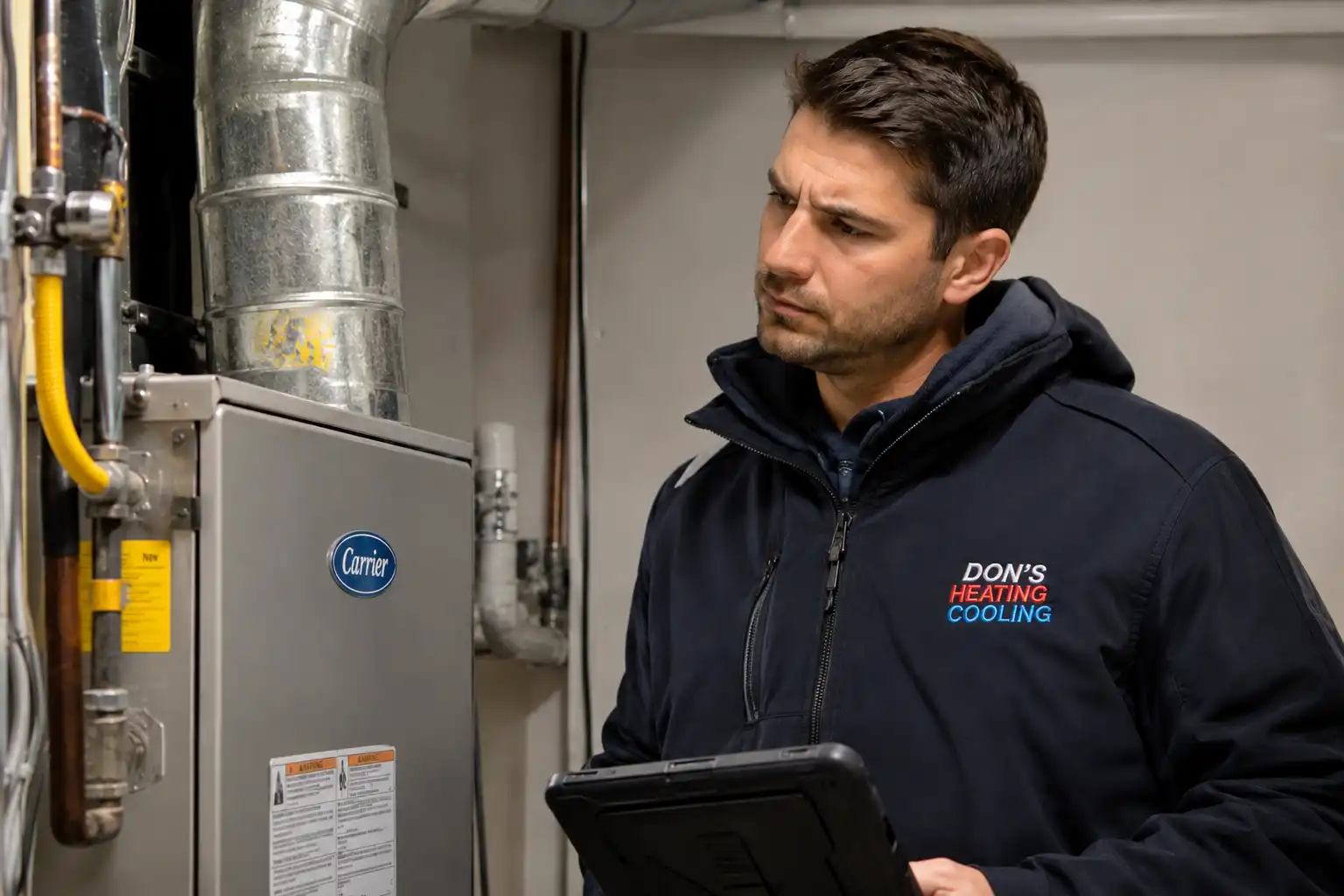
You’re sitting at home on a cold evening when your furnace suddenly makes a loud bang, an unfamiliar buzzing sound or a high-pitched whistle. It’s still heating your home, but something doesn’t sound right.
Should you turn it off? Is it safe to leave it running overnight? Or could it be something as simple as a dirty air filter?
A furnace making unusual noises may have restricted airflow, loose components, worn motor bearings, electrical problems or an ignition issue. The type of noise, where it comes from and when it occurs can all help you understand how serious the problem might be.
For homeowners in Orangeville, Alliston and surrounding communities, recognizing these warning signs early can help prevent an unexpected heating breakdown during an Ontario winter.
Here’s how to tell the difference between normal furnace sounds and those that deserve your attention.
What Does a Normal Furnace Sound Like?
No furnace is completely silent. Even a properly functioning heating system produces some noise as it starts, heats your home and shuts down.
Normal furnace sounds may include:
- A brief click at the beginning of a heating cycle.
- A gentle humming sound from the motor.
- A steady sound of air moving through the vents.
- Occasional light popping as metal ductwork expands and contracts.
- A fan that continues running briefly after the burners turn off.
The key is knowing what is normal for your particular system. A familiar, consistent sound is generally less concerning than a noise that suddenly appears, becomes louder or occurs alongside reduced heating performance.
Furnace Noise Troubleshooting: A Quick Reference Guide
Not sure what you’re hearing? Use this table as a starting point.
| Furnace sound | Possible cause | Recommended action |
|---|---|---|
| Banging or booming | Delayed ignition or expanding ductwork | Turn off the furnace if the bang comes from inside the unit at ignition. |
| Rattling | Loose components or blower vibration | Arrange an inspection if persistent. |
| Buzzing or loud humming | Motor or electrical problem | Schedule service; shut down if the motor appears unable to start. |
| Whistling | Restricted airflow or ductwork gaps | Check the filter and vents. |
| Repeated clicking | Ignition or electrical control issue | Arrange professional diagnosis. |
| Squealing or screeching | Worn motor bearings or other moving components | Turn off the furnace and arrange service. |
| Grinding or scraping | Damaged blower wheel or mechanical failure | Stop using the furnace and arrange urgent repair. |
These sounds provide useful clues, but noise alone cannot confirm which component has failed.
7 Common Furnace Noises and What They Mean
1. Furnace Making a Loud Banging or Booming Noise
A loud bang when your furnace starts can be particularly alarming. The first thing to consider is whether the sound comes from the furnace itself or from the ductwork.
A sudden boom inside a gas furnace when the burners ignite may indicate delayed ignition. This happens when gas does not ignite promptly, resulting in a forceful ignition when it finally lights.
Repeated delayed ignition can damage furnace components and requires immediate professional attention.
However, a light popping sound from the ductwork as the heating cycle begins or ends may simply be caused by metal expanding and contracting with temperature changes.
What should you do?
If the furnace itself makes a loud bang during ignition, shut it down if it is safe to do so and arrange professional service. Do not repeatedly restart it to see whether the noise returns.
2. Furnace Making a Rattling Noise
A rattling furnace can sound like a loose piece of metal vibrating every time the heating system runs.
Possible causes include:
- Loose exterior panels or ductwork connections.
- A vibrating air register.
- Loose internal furnace components.
- A damaged or unbalanced blower wheel.
Pay attention to where the rattling is loudest. A noise coming from a floor register in your living room may have a different cause from one coming directly from the furnace cabinet.
What should you do?
Check whether nearby household objects or vent covers are vibrating. If the rattling appears to come from inside the furnace, leave the inspection to a technician. Do not remove furnace panels or attempt to tighten internal components yourself.
3. Furnace Making a Buzzing or Loud Humming Noise
A quiet hum is often part of normal furnace operation. A new, loud electrical buzzing sound is different.
Potential causes include an electrical transformer problem, a failing blower motor or, in furnaces equipped with one, a faulty motor capacitor.
One particularly important warning sign is a furnace that makes a loud humming sound without producing its usual airflow.
This may indicate that the blower motor is struggling to start.
What should you do?
If the buzzing is new or getting louder, have the system inspected. If the furnace is humming but the blower appears unable to operate, turn the system off and arrange service.
4. Furnace Making a Whistling Noise
A whistling furnace often points to an airflow problem. Air being forced through a restricted opening can produce a noticeable high-pitched sound.
Common causes include:
- A dirty or clogged furnace filter.
- An excessively restrictive or incorrectly fitted filter.
- Blocked return-air grilles.
- Closed or obstructed supply vents.
- Small gaps or leaks in the ductwork.
Unlike many mechanical furnace noises, whistling may sometimes be resolved with a simple homeowner maintenance check.
What should you do?
Turn the furnace off before checking the filter. Replace it if necessary, following the manufacturer’s recommendations. Make sure furniture, rugs and other household items are not blocking vents or return-air grilles.
If you’re unsure how to check or replace your filter, follow our guide on how to change your furnace filter.
If the whistling continues after these checks, a technician can investigate the ductwork, airflow and blower operation.
Still hearing an unfamiliar furnace noise?
If you’ve checked the filter and vents but the sound hasn’t gone away, Don’s Heating & Cooling provides professional furnace repair in Orangeville and Alliston. We can help identify the source of the noise and determine what needs attention.
5. Furnace Making a Repeated Clicking Noise
A brief clicking sound when your furnace starts is not necessarily a problem. Depending on the furnace model, it may be part of the normal operation of its controls or ignition system.
Repeated clicking without heat, however, deserves attention.
It may indicate an issue with the ignition system, flame detection, gas supply or electrical controls.
The most useful clue is whether the furnace successfully completes its heating cycle.
What should you do?
If your furnace repeatedly clicks but fails to produce heat, avoid repeatedly resetting or restarting it. Arrange a professional inspection to determine why the heating cycle is not completing.
6. Furnace Making a Squealing or Screeching Noise
A sharp, high-pitched squeal coming directly from the furnace is different from a whistle coming from an air vent.
Squealing or screeching may indicate worn motor bearings, a problem with the blower or draft inducer motor, or a worn belt in certain older furnace designs.
These components operate frequently throughout the heating season, making mechanical wear a possible cause of unfamiliar noises.
What should you do?
Turn off the furnace and arrange an inspection, particularly if the noise is loud or persistent. Do not attempt to lubricate the motor yourself, as many modern furnace motors have sealed bearings.
7. Furnace Making a Grinding or Scraping Noise
A grinding or metal-on-metal scraping sound is one of the more concerning noises a furnace can make.
It may indicate that a blower wheel is damaged, has shifted out of position or is making contact with another component. Worn motor bearings can also produce grinding sounds.
Continuing to operate the system may worsen the damage.
What should you do?
Stop using the furnace and arrange prompt professional repair. This is not a noise you should wait several days to investigate.
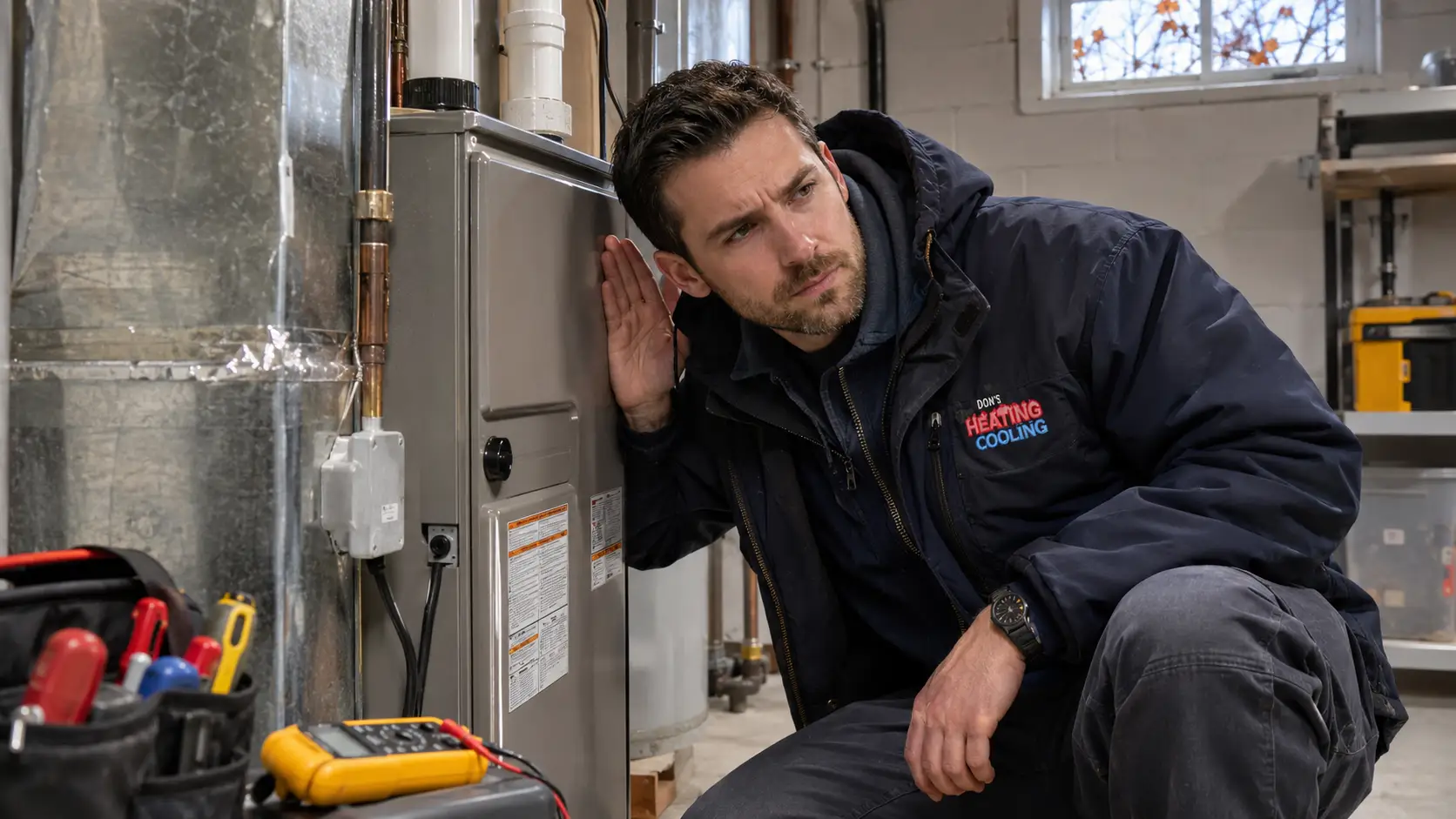
When Does Your Furnace Make Noise? Timing Matters
Two furnaces making a similar sound can have very different problems. Knowing when the noise occurs can be just as helpful as identifying the sound itself.
| When the noise occurs | What it may indicate |
|---|---|
| During start-up | Ignition, draft inducer or start-up control problems. |
| When air begins flowing | Blower, filter or ductwork issues. |
| Throughout the heating cycle | Motor wear, vibration or restricted airflow. |
| When the furnace shuts off | Ductwork contraction or a mechanical issue as the blower slows down. |
| When the system is not calling for heat | Continuous fan operation, electrical controls or a sound originating elsewhere. |
Also consider whether the noise occurs every time the furnace runs or only occasionally.
These observations can help a technician narrow down the possible causes without unnecessary guesswork.
Is It Safe to Keep Running a Noisy Furnace?
It depends on the sound and whether other warning signs are present.
Occasional light ductwork popping, a familiar motor hum or a brief start-up click may be normal.
However, you should stop using your furnace and arrange professional service if you notice:
- Loud banging or booming from inside the furnace.
- Grinding, scraping or persistent screeching.
- Burning or electrical odours.
- Loud humming accompanied by little or no airflow.
- Repeated failed ignition attempts.
- Unusual noises accompanied by frequent shutdowns or poor heating.
Important: If you smell natural gas or your carbon monoxide alarm sounds, leave your home immediately. Do not operate the thermostat, electrical switches or furnace controls. Call 911 from a safe location outside. For a suspected gas leak, you can also contact your gas utility from outside.
Carbon monoxide is odourless, so the absence of an unusual smell does not mean a malfunctioning furnace is safe.
For further information, read Enbridge Gas’s carbon monoxide safety guidance.
4 Things You Can Safely Check Before Calling an HVAC Technician
If the noise is mild and there are no safety warning signs, a few simple observations may help identify the source.
1. Check the furnace filter. With the system switched off, inspect the accessible filter according to the manufacturer’s instructions. A dirty or unsuitable filter can restrict airflow and contribute to whistling.
2. Check your air vents. Make sure supply registers are open and return-air grilles are not obstructed by furniture, curtains or rugs.
3. Look around the furnace. Check whether nearby objects are vibrating or touching the exterior of the equipment.
4. Note when and where the sound occurs. If the furnace is already operating without concerning warning signs, take note of when the noise starts and where it seems loudest.
Avoid opening the furnace cabinet, adjusting gas valves, handling electrical components or attempting to repair moving parts yourself.
What to Tell Your HVAC Technician About the Noise
Before booking a service appointment, write down a few details about what you’ve noticed:
- What does the noise sound like?
- Does it occur during start-up, heating or shutdown?
- Is it coming from the furnace, ductwork or a specific vent?
- Is your home still reaching the temperature set on the thermostat?
- Did the noise begin after a filter change or recent service?
- Have you noticed weaker airflow or unexpected shutdowns?
If it is safe, a short audio or video recording of the sound can also be helpful. Never restart a potentially unsafe furnace just to capture a recording.
Providing these details can help your technician approach the inspection with a better understanding of the problem.
Why Furnace Noises Are Worth Addressing Before a Cold Snap
During colder weather in Orangeville and Alliston, furnaces often run for longer periods to maintain comfortable indoor temperatures.
Longer operating times are not automatically a sign of trouble. However, they may make existing airflow restrictions, vibration and mechanical wear more noticeable.
Regular filter checks and professional furnace maintenance can help identify developing issues before they result in a loss of heat.
If your furnace has already developed an unfamiliar noise, don’t assume that routine maintenance alone will resolve it. Some problems require a specific repair.
Frequently Asked Questions
Why is my furnace suddenly louder than usual?
A sudden increase in furnace noise may be caused by restricted airflow, a loose component, blower motor wear or an ignition problem. The type and timing of the sound can help narrow down the cause.
Can a dirty furnace filter cause noise?
Yes. A clogged or excessively restrictive filter can reduce airflow and produce whistling or unusually loud air movement. If replacing the filter does not resolve the issue, further inspection may be necessary.
Why is my furnace making noise but still heating my house?
A furnace can continue producing heat even when a component is beginning to fail. Loose parts, worn bearings and airflow problems may create noise before heating performance noticeably declines. A warm home does not necessarily mean your furnace is operating safely.
Why does my furnace make a popping noise when it turns off?
Light popping may occur as heated metal ductwork cools and contracts. However, a loud, recurring bang or mechanical noise from the furnace itself should be investigated.
Does a noisy furnace need to be replaced?
Not necessarily. Many furnace noises are caused by repairable issues such as loose components, airflow restrictions or worn parts. The age, overall condition, safety and repair requirements of the system should all be considered before deciding whether replacement is necessary.
Need Help With a Noisy Furnace in Orangeville or Alliston?
You don’t have to wait until your furnace stops working to have it checked.
Whether you’re hearing a persistent rattle, an unfamiliar buzzing sound or a loud noise when your furnace starts, Don’s Heating & Cooling can help you understand what’s happening and determine the appropriate next step.
Contact our team to arrange a furnace inspection or repair in Orangeville, Alliston and surrounding communities.