
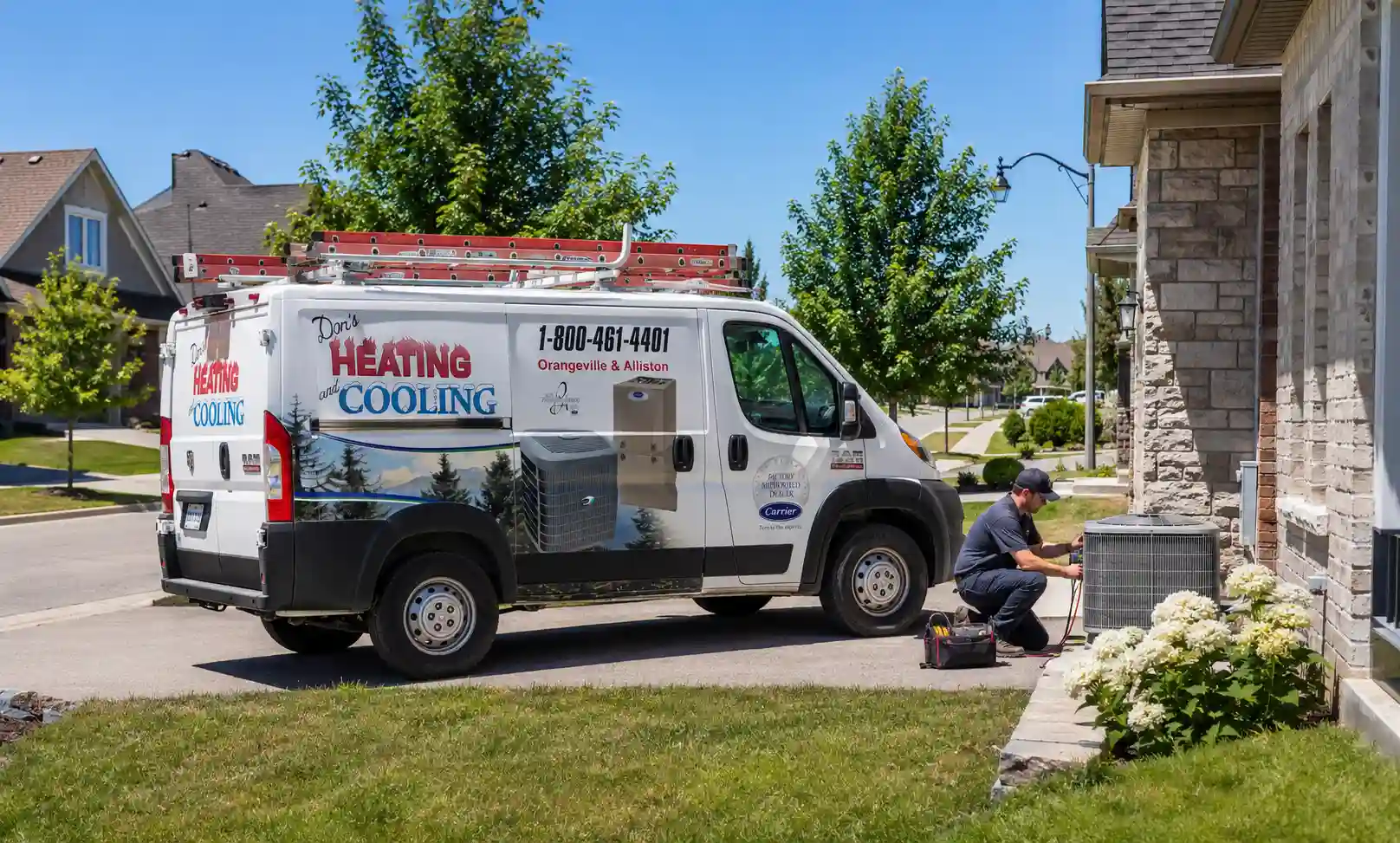
When a heat wave hits Southern Ontario and a heat warning is in effect, many homeowners notice the same problem: the air conditioner is running, but the house still feels warmer than usual.
That can be frustrating, especially when the system seems to be working nonstop. But during extreme heat and humidity, an air conditioner has to work much harder than it does on a normal summer day. Your home continues to absorb heat through windows, exterior walls, attic spaces, doors, and sun-facing rooms, while your AC is trying to remove both heat and moisture from the indoor air.
In some cases, longer AC runtime during a heat wave is normal. In other cases, it can be a sign that your cooling system needs professional attention.
Here is how to tell the difference, what you can safely check yourself, and when it may be time to call for AC repair in Orangeville and Alliston.
Why Air Conditioners Struggle During Extreme Heat
Most residential air conditioners are designed to keep your home comfortable during typical summer weather. But when outdoor temperatures stay high for several days, especially with high humidity and warm nights, your AC may have a harder time keeping up.
During a heat wave, your system may run for longer periods because:
- The outdoor temperature is much higher than usual.
- Humidity makes the indoor air feel warmer.
- Your home may gain heat faster than the AC can remove it.
- Sun-facing rooms, upstairs bedrooms, and poorly insulated areas may stay warmer.
- The system may not get much relief overnight if temperatures remain high.
This does not always mean your AC is broken. However, extreme heat can reveal problems that were already developing, such as restricted airflow, low refrigerant, a dirty outdoor coil, or worn components.
For current local alerts and forecast updates, homeowners can check Environment Canada’s Orangeville forecast or Environment Canada’s Alliston forecast.
What Can Be Normal During a Heat Wave?
Your AC may still be operating normally if:
- It runs longer than usual during the afternoon and early evening.
- The air coming from the vents still feels cool.
- The indoor temperature is only a few degrees above the thermostat setting during peak heat.
- Upstairs rooms or rooms with direct sunlight feel warmer than the rest of the home.
- The system starts to catch up later in the evening.
- The home feels more comfortable after blinds are closed and indoor heat sources are reduced.
During extreme weather, it may be unrealistic to expect every room to feel perfectly cool at all times, especially in older homes, homes with poor insulation, or homes with large sun-facing windows.
A good rule of thumb is this: if your AC is blowing cool air and the home is slowly improving, the system may simply be working against extreme outdoor conditions.
What Is Not Normal?
While longer runtime can be normal during a heat wave, some symptoms should not be ignored.
You may need AC repair if:
- The air from the vents feels warm or barely cool.
- Airflow from the vents is weak.
- The indoor temperature keeps rising even though the AC is running.
- The system runs all day and never catches up, even at night.
- The AC turns on and off repeatedly in short cycles.
- You see ice on the refrigerant line or indoor coil.
- The outdoor unit is making loud, unusual, or buzzing noises.
- There is water pooling around the indoor unit.
- You notice burning smells or electrical odours.
- The system will not turn on at all.
These signs can point to issues such as low refrigerant, a frozen coil, a clogged filter, a failing capacitor, a dirty condenser coil, a blower motor problem, or another mechanical or electrical issue.
Simple Things to Check Before Calling for Service
Before booking a repair, there are a few safe checks homeowners can do.
1. Check the Air Filter
A clogged air filter can restrict airflow and make your AC work harder. If the filter is dirty, replace it and give the system time to stabilize.
Poor airflow can also lead to frozen coils, reduced cooling, and longer runtime.
2. Make Sure Vents Are Open and Clear
Walk through your home and make sure supply and return vents are open. Move furniture, rugs, curtains, or boxes away from vents so air can move properly.
Closing too many vents can also create airflow problems and put extra strain on the system.
3. Check the Thermostat Settings
Make sure the thermostat is set to cooling mode and that the temperature is set lower than the current indoor temperature.
If your thermostat uses batteries, replace them if the screen is dim or unresponsive.
4. Look Around the Outdoor Unit
Your outdoor AC unit needs open space to release heat. Check for grass, weeds, leaves, branches, or debris around the unit.
Do not open the unit or try to repair electrical parts yourself. But keeping the area around the unit clear can help airflow.
5. Close Blinds and Reduce Indoor Heat
During the hottest part of the day, close blinds and curtains, especially on sun-facing windows. Avoid using the oven, dryer, or other heat-producing appliances if possible.
Ceiling fans can also help you feel cooler, but remember that fans cool people, not rooms. Turn them off when you leave the room.
Should You Lower the Thermostat More During a Heat Wave?
It is common for homeowners to lower the thermostat much more than usual when the house feels warm. But setting the thermostat extremely low will not make the AC cool faster.
For example, setting the thermostat to 18°C will not cool the home faster than setting it to 22°C. It only tells the system to keep running longer.
During extreme heat, a better approach is to choose a reasonable temperature, keep blinds closed, reduce indoor heat sources, and let the system work steadily. If the home still does not cool down, that may be a sign of an AC problem rather than a thermostat problem.
When AC Repair Becomes More Urgent
During a heat wave or official heat warning, AC problems can become more serious because indoor temperatures can rise quickly.
You should not wait too long to call a technician if:
- Your AC is blowing warm air.
- The indoor temperature keeps climbing.
- You have young children, older adults, or people with health conditions in the home.
- The AC has stopped working completely.
- There are electrical smells or unusual noises.
- You see ice on the system.
- There is leaking water around the indoor unit.
Extreme heat can be dangerous, especially for people who are more vulnerable to heat-related illness. Health Canada recommends staying cool, staying hydrated, avoiding unnecessary heat exposure, and paying attention to how you and those around you feel during extreme heat events. You can read more in Health Canada’s extreme heat safety guidance.
If your home becomes too hot and unsafe, consider spending time in a cooler place such as a library, community centre, shopping centre, or another air-conditioned location.
Why Heat Waves Often Expose AC Problems
An air conditioner may seem fine during mild weather but struggle during the first major heat event of the season. That is because extreme heat puts the system under much higher demand.
A small issue, such as a dirty filter or weak capacitor, may not be obvious when the AC only runs for short periods. But when the system has to run for hours, that same issue can lead to poor cooling, short cycling, freezing, or a full breakdown.
That is why many AC repair calls happen during heat waves. The system is under pressure, and existing problems become harder to ignore.
Local AC Repair Help in Orangeville, Alliston, and Nearby Areas
If your air conditioner cannot keep up during an Ontario heat wave, you do not have to guess whether the problem is normal or serious.
Don’s Heating & Cooling provides local cooling service, diagnostics, and AC repair for homeowners in Orangeville, Alliston, New Tecumseth, Dufferin County, Simcoe County, and nearby communities.
As a trusted HVAC company in Orangeville and Alliston, our team can inspect your system, explain what is happening, and recommend the right next step.
If your AC is running constantly, blowing warm air, making unusual noises, leaking water, or failing to keep your home comfortable, schedule professional service before the problem gets worse.
Key Takeaway
During a heat wave, it can be normal for your AC to run longer than usual. But it is not normal for the system to blow warm air, have weak airflow, freeze up, leak water, make unusual noises, or allow the indoor temperature to keep rising.
If your AC is working hard but still cooling, you may be dealing with the effects of extreme weather. If your AC is running constantly and your home is not getting cooler, it may be time to call for professional AC repair.